Build a Logic Model for Youth Programs
A practical, ready-to-use guide and template to help your team design, refine, and use logic models as tools for learning and improvement.
Moving Beyond Logic Models for Compliance
Many youth-serving organizations already think about their work in terms of goals, activities, and outcomes. At times, those connections are not always clearly documented or consistently used. This toolkit is designed to help make those connections more visible and actionable.
Who is This For?
This toolkit is designed for youth-serving organizations, schools, and partners who want to strengthen program design, evaluation, and learning. Whether you are building a logic model for the first time or refining an existing one, this toolkit provides practical guidance you can use with your team.
What’s Included:
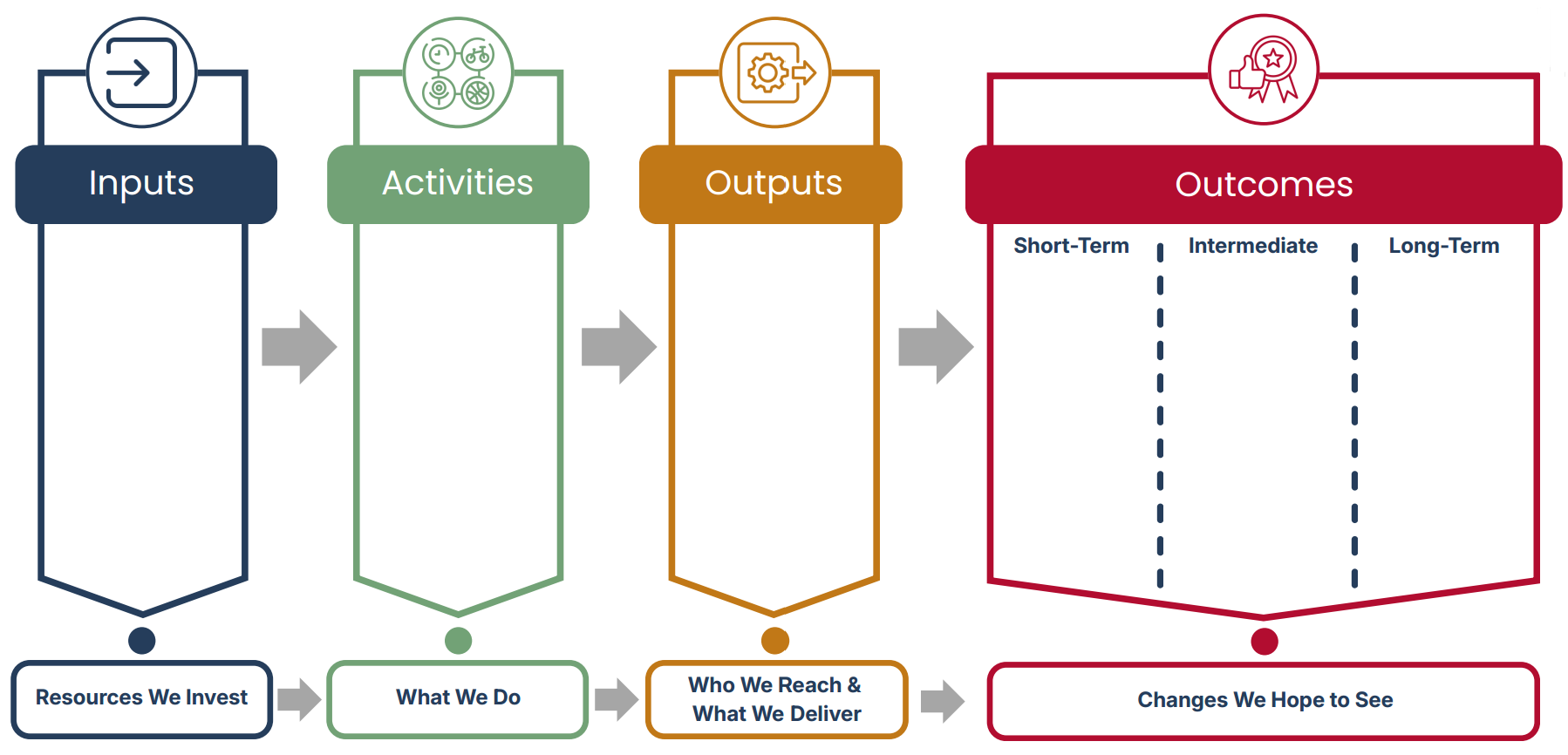
Step-by-step worksheets for each component of a logic model
Clear definitions and examples from youth programs and schools
A complete, ready-to-use logic model template
Detailed case study examples
Practical tips to support reflection and continuous improvement
What Makes This Different:
Supports teams in using logic models as living tools
Helps clearly distinguish between outputs and meaningful outcomes
Includes case study examples grounded in real youth program contexts
Supports the use of logic models for learning and program improvement
Encourages capturing outcomes across multiple actors (youth, staff, families)
This toolkit was created by Dr. Ashley Boat, Founder and Principal Consultant of Northstar Evaluation. Ashley partners with youth-serving organizations and funders to strengthen program design, measure impact, and support data-informed decision-making.